
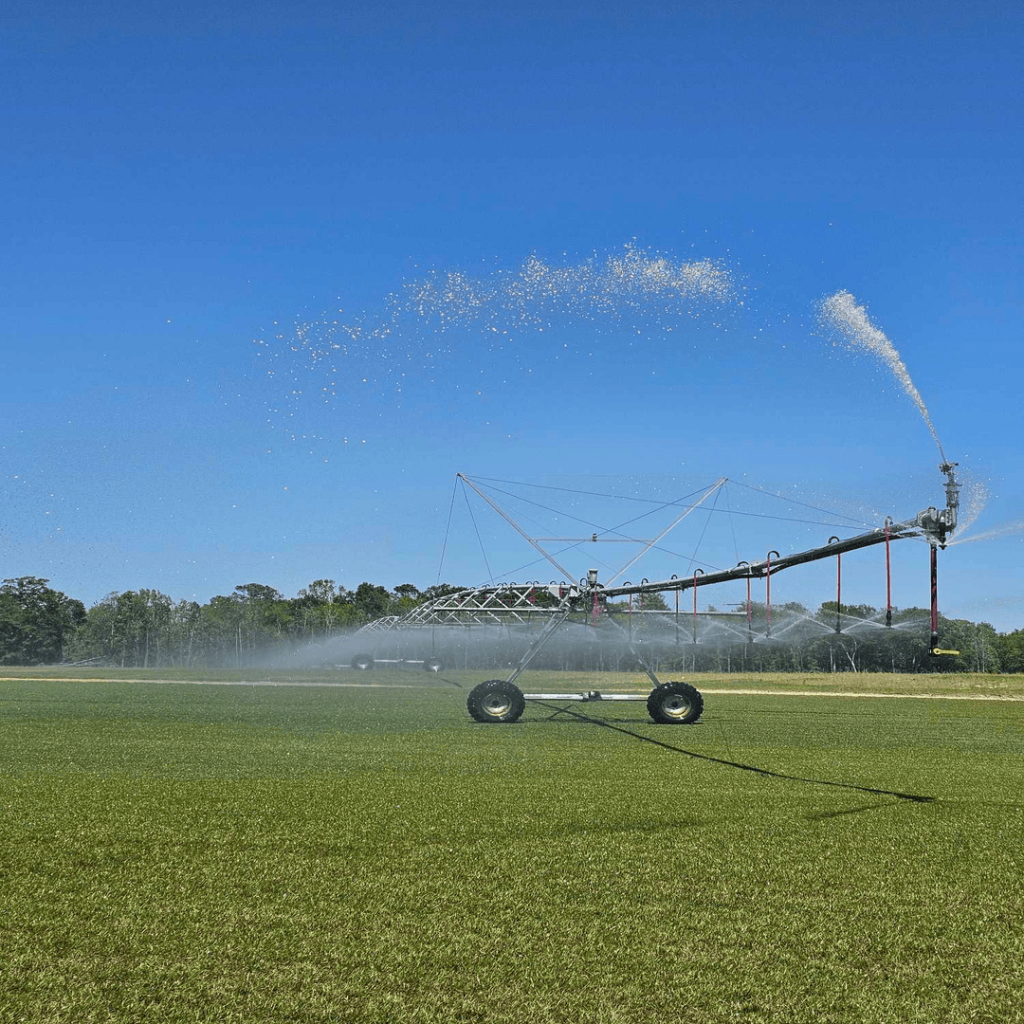
Keeping your lawn green and healthy doesn’t have to mean spending big bucks or using up a ton of water. In fact, there are plenty of smart, tried-and-true ways to cut back on water and be more environmentally friendly! This article will show you the ropes on smart lawn watering that keep your wallet and yard in shape.
How Much Water Does Your Lawn Need?
Generally, most grass types need about 1 inch of water per week, including rainfall, and thrive with early morning watering. Watering in the evening can increase the risk of disease, particularly in warm weather. Morning watering allows the water to soak into the roots and evaporate gradually throughout the day, preventing the excess moisture that can lead to disease.
How Does Soil Type Affect Watering Practices?
Soil type significantly influences how water is absorbed and retained, affecting your lawn’s watering needs. Here’s how to adjust watering practices based on different soil types:
Sandy Soil
- This type of soil drains quickly and doesn’t hold moisture well, requiring more frequent watering so the grass gets enough hydration. However, each watering session should be shorter to avoid water wastage that simply drains below the root zone.
Loamy Soil
- Loam is ideal for growing grass because it balances moisture retention and drainage. Watering can be less frequent than in sandy soils but deeper in loamy soil, as it retains water longer and supports consistent moisture for grassroots.
Clay Soil
- Clay holds water much longer due to its dense structure, which means it needs less frequent watering. However, water should be applied slowly to prevent surface runoff and ensure that it seeps down to the roots. Over-watering should be avoided to prevent waterlogging, which can suffocate roots and lead to diseases.
Money-Saving Tips
- Water Only When Necessary: To check if your lawn needs watering, try walking across it or pushing a screwdriver into the soil. If you see footprints or the screwdriver slides in easily, it’s time to water.
- Water Deeply and Infrequently: Water less frequently but for longer durations to promote deep root development. Target about 1 inch of water per week.
- Optimize Watering Time: To minimize evaporation and reduce the risk of diseases, water during the cooler parts of the day, preferably early morning.
- Use Efficient Sprinklers: Opt for sprinklers like impact or rotary models that deliver large water droplets close to the ground to reduce evaporation.
- Install Rain Sensors and Soil Moisture Sensors: Equip your irrigation system with these sensors to automatically adjust your watering schedule according to real-time weather and soil moisture conditions, avoiding unnecessary watering.
- Perform an Irrigation Audit: Regularly audit your irrigation system to check for leaks, misalignment and efficiency. This involves measuring the water output in different zones to ensure even distribution and adjusting as necessary to optimize water usage.
- Check for Leaks and Misaligned Sprinklers: Regularly inspect your sprinklers to ensure they’re not watering driveways or sidewalks, which wastes water.
- Consider Drip or Soaker Hoses: These watering methods deliver water directly to the plant roots, greatly reducing evaporation and runoff.
- Maintain Your Lawn Properly: Keep your grass cut higher to help shade the soil and retain moisture, reducing the need for frequent watering.