
The Beauty—and Challenge—of Fall
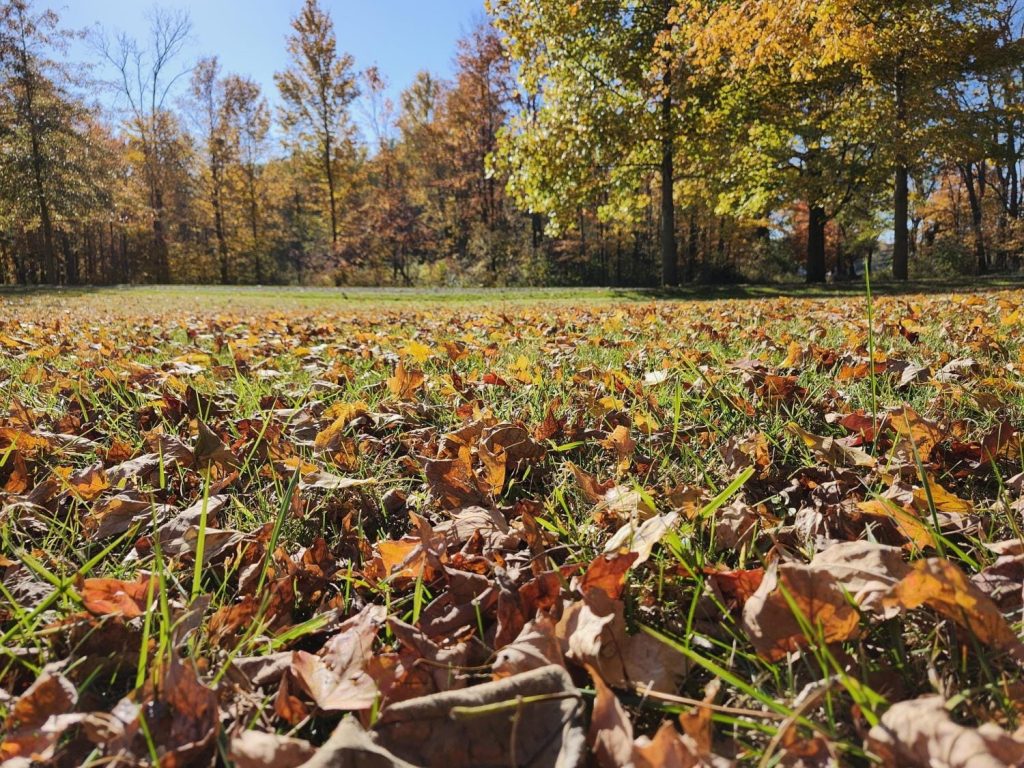
Crisp air, colorful trees, and leaves drifting down—fall is here! But as lawns start disappearing under blankets of red, orange, and yellow, homeowners face the yearly question:
“What should I do with all these leaves? Rake them? Mulch them? Leave them alone?”
There are several options, each with its own pros and cons. Let’s walk through the best approaches.
Option #1: Do Nothing
The simplest option is to let leaves pile up. But it’s usually not the best choice.
Why not?
- Thick layers of leaves block sunlight from reaching grass
- Moisture trapped between leaves and turf fosters disease and pests
- Turfgrass needs access to sunlight, air and nutrients in fall to prepare for winter
If you choose this route, consider applying fungicides to protect against turf diseases.
Option #2: Mulch Leaves Into the Lawn Recommended
One of the best methods is to mow directly over leaves and turn them into natural mulch.
Benefits of mulching leaves:
- Enhances soil fertility with natural compost
- Protects turfgrass through the winter
- Saves time and effort compared to bagging
How to do it:
- Remove the catcher from your mower
- Mow over leaves several times until chopped into coin-sized pieces
- Make sure the grass still peeks through the mulch layer
Pro tip: Add fertilizer while mulching to supercharge results.
Option #3: Rake, Blow, or Bag
For those who don’t like the mulched look, you can remove leaves entirely.
Options include:
- Raking or blowing leaves off the lawn
- Bagging leaves when mowing with a non-mulching mower
- Using leaves as bed mulch or around tree bases
- Composting leaves or setting them roadside in approved bags
Downsides:
- Bagging leaves is least environmentally friendly
- Most labor-intensive method
- Turf misses out on natural nutrients
Option 4: A Combination Approach
You don’t have to stick to just one method. Try this balanced approach:
- Remove early leaves for neat curb appeal
- Mulch or bag the rest throughout the season
This way, you maintain a tidy look while still reaping the nutritional benefits of mulching. Fall leaves don’t have to be a burden. Instead, they can be an opportunity to:
- Improve soil health naturally
- Save time and effort
- Protect your lawn through winter
This season, if you usually spend hours raking and bagging, consider giving mulching a try. Your lawn—and your back—will thank you.